Monday, September 20, 2010

Pork Shoulder with Mole Sauce

Recipe: Pork Shoulder with Mole Sauce
Page: 183
Date Cooked: September 19, 2010

I delved into this recipe slightly uncertain. I had never used chocolate in a savory recipe, had never made a mole, and wasn't all to familiar with cooking pork shoulder. Furthermore, the recipe seemed to be quite complex and time consuming. But at the end of it all, I was pleasantly surprised and the smell of the stew was intoxicating from beginning to end.

Ingredients: Boneless pork shoulder, garlic cloves, cilantro, sake, dried pasilla chiles, serrano chiles, habanero chiles, onions, bacon, tomatoes, unsalted butter, chicken broth, basmati rice, salt, pepper, unsweetened chocolate, and all-purpose flour.

I think the moment you realize a dish requires more than one day to make, it begins to feel burdensome. Luckily, Jonathan Waxman's pork shoulder marinade wasn't much of a fuss at all - garlic, cilantro stems, and sake were the components of the marinade. Also, the pork shoulder was cut into 1-inch cubes. He suggests marinating it for at least 8 hours and I ended up marinating it for almost a full 24 hours.

Pork shoulder with marinade
The next day it was all about making the stew. The recipe calls for three different kinds of chiles - pasilla, serrano, and habanero. The pasilla chiles start off in dried form and are placed in warm water to bring them back to life. Prep for the serrano and habanero chiles was familiar - the same blackened and blistered steps utilized in the Warm Lobster Tacos with Guacamole recipe. However, these chiles were smaller and a bit harder to seed. All the chiles were finely chopped and mixed together.

Pasilla chiles being soaked. Habanero and serrano chiles blackened and blistered.
Then it was on to the chopping - the onions, the garlic, the tomatoes, and the bacon. The recipe calls for either a large enameled cast-iron casserole or Dutch oven. Luckily for me, my roommate invested in a Dutch oven a few weeks back and I was able to put it to use (Thanks Cari!). The bacon is cooked for a few minutes to render some of its fat and then the other chopped components as well as half of the chiles are added and sautéed. Once complete, the bacon-vegetable mixture is removed and the pot is wiped out. I would like to mention that the smells were already amazing at this point.

Left: Bacon with some of its fat rendered and chopped components
Middle: All the components before being sautéed
Right: After being sautéed  
The pork shoulder was now ready to leave the marinade (the marinade is reserved for later in the recipe) and be browned using butter in the pot over medium-high heat. The delicious smell of pork just continued to waft in my home. I also hate to admit that I was tempted to not finish the recipe and eat the browned pork and the bacon-vegetable mixture on their own.

Beginning to brown the pork shoulder 

Once all the pork has been browned and removed from the pot. The strained marinade and chicken broth are used to deglaze the pot and scrape up any browned bits. The pork and the bacon-vegetable mixture are now placed back into the pot and brought to a boil. The heat is then reduced to a simmer, the pot is covered, and the stew now cooks for approximately 2 hours.

Marinade and chicken broth in pot with bacon-vegetable mixture and browned pork shoulder.

Approximately 20 minutes before the stew is complete, the recipe instructs you to begin preparing the basmati rice. Jonathan Waxman calls for the rice to be cooked with some butter as well as salt and pepper to taste. Just in case I forget to mention it later - the rice was delicious! But what isn't delicious when you add butter?

In order to finish the stew and I suppose in order to really call it a mole, it was now time to use the chocolate. The chocolate was chopped and set aside. While, the flour and butter were mixed together with the remaining half of the chiles. The flour mixture was whisked into the stew and the chocolate was added. The moment the chocolate was introduced into the stew - the color changed to a deep brown (chocolate brown, actually).

This picture highlight the color change once the chocolate is added to the stew.
The pork shoulder with mole sauce was almost complete - another 10 minutes on high heat with constant stirring. The cooked rice was then placed into bowls, topped with stew, garnished with cilantro, and ready for consumption.

Pork Shoulder with Mole Sauce
The adjective "rich" is the best word to describe Jonathan Waxman's Pork Shoulder with Mole Sauce. The first bite was interesting. I wasn't ready for the flavor and unsure of what to expect. I tasted a richness - a mixture of dark chocolate and pork. I went in for the second bite, this time picking up bits of the browned bacon and again thinking about how rich the dish was. After the third bite I was convinced...it was delicious!

The pork was cooked perfectly, it melted in your mouth. The rice helped cut the richness of the mole sauce and provided a well needed texture contrast. The things I couldn't taste and really wanted to taste were the garlic, the onions, and the tomatoes. The smell of those ingredients had taunted me while cooking and their flavors seemed to get lost in the richness of the mole sauce. Moreover, I didn't get the full impact of the heat of the three different kinds of chiles required for this dish. Granted, I personally am a fan of spicy and therefore wanted a little more of a kick.

All in all, Jonathan Waxman's Pork Shoulder with Mole Sauce was rich and delicious. The recipe appeared to be painstakingly tedious, but actually was not too bad. It's a recipe that I plan on keeping in my repertoire.

Enjoy!

Note: The ingredients for the recipe were halved.

Thursday, September 9, 2010

Pismo Beach Clam Ragout

Recipe: Pismo Beach Clam Ragout
Page: 229
Date Cooked: September 8, 2010

I may get ahead of myself here and give away the punch-line, but the thing is Jonathan Waxman's Pismo Beach Clam Ragout is simple, quick, and delicious. I was in one of those moods where I wanted to cook but really didn't want an entire production. Also, with Labor Day behind us I knew summer was coming to a close and I needed to relish in its flavors just a little longer.

Ingredients: Littleneck clams, corn, onions, butter, salt, pepper, dry white wine.
Prep was a cinch. Shuck the corn and get the kernels off the cob. Slice the onions into rings. And wash the clams. The great thing about clams (as part of the shellfish category) is that they are so easy to make and don't require much skill to handle - it's almost hard to mess it up. But remember, if you're getting them at the grocery store, don't tie the bag - they will end up dying and you really can't eat them afterward.

The three main components: corn, onions, and clams
The cooking portion of the recipe was even simpler than the prep. Saute the onions and corn with butter, seasoning with salt and pepper. Then the clams and white wine are added. The pan is covered and it all cooks together until the clams are open. The finished product:

Pismo Beach Clam Ragout
I believe this recipe rings true to the fact that simple can be oh so delicious. Basic seasoning and ingredients can just enhance a seasonal product. The corn was delicious and you really can't go wrong with white wine and clams. The best part: it all cooks in one pan! There just happens to be an aspect of grace in the simplicity of this recipe. Nothing groundbreaking, but yummy.

Enjoy!

Note: The ingredients have been halved.

Tuesday, September 7, 2010

Warm Lobster Tacos With Guacamole

Recipe: Warm Lobster Tacos With Guacamole
Page: 231
Date Cooked: Monday, August 6, 2010

From my initial skim of "A Great American Cook," it was obvious from the get-go that Jonathan Waxman has an affinity for lobster, chilies, and guacamole. So it came with little surprise that he combined those three items to come up with this recipe.

Ingredients: Live lobsters, onions, tomatoes, shallots, jalapeno chilies, cilantro, poblano chilies, avocados, lime, sea salt, corn tortillas, and olive oil

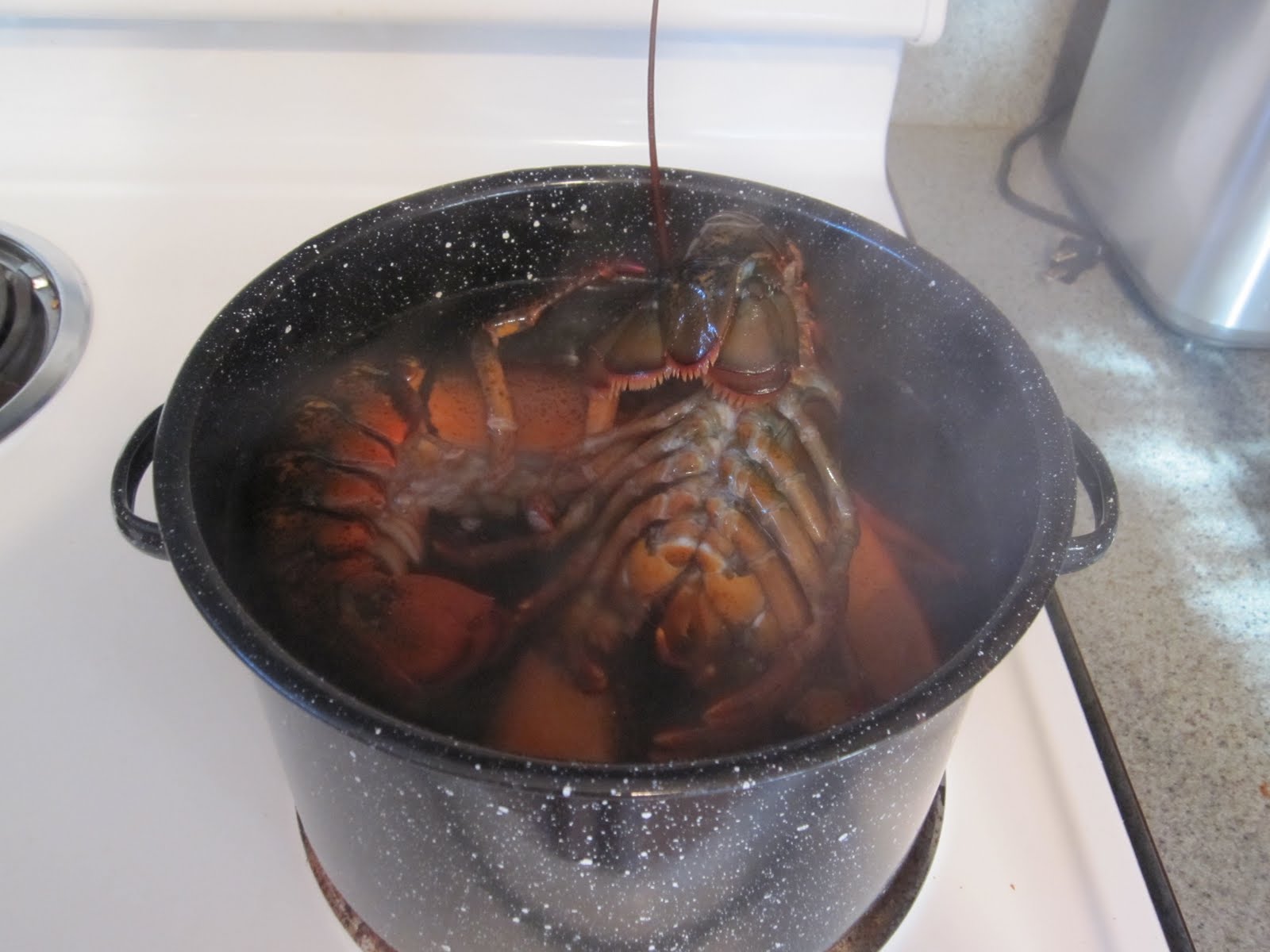
I think any recipe that calls for something to be alive can come with some trepidation. The trick with lobster though is put it in the freezer long enough for them to be slow (but of course not dead) and then when the water is boiling drop them in. This was the right method for me. It minimizes any thrashing or boiling water spillage.

Two medium sized Maine lobsters

The rest of the recipe called for lots of chopping. However, while you chop, a reduction of onion, lobster shells, and two cups of the lobster cooking water are placed on the stove, allowing you to use your time somewhat wisely.

The components of the reduction
Jonathan Waxman instructs you to blacken and blister some poblano and jalapeno chilies. I hadn't used this technique before and was intrigued by what would come of this. Once the chilies have achieved a blackened and blistered state, they are steamed in their own heat. The next part was the most interesting. You peel the skin by hand, stem, seed, and then cut into strips.

Process of blackening, blistering, steaming, peeling, stemming, and seeding the chilies
While the chilies and the tomato salsa (more on that later) appeared to be a bit of a tedious process, the guacamole was quite simple - avocados, salt to taste, cilantro, and lime. Now remember that lobster broth reduction we have going, well here is where that comes in. In a large bowl, tomatoes, shallots, jalapenos, and cilantro have been chopped, mixed, and tossed. Almost a quarter of the reduced lobster broth is then added to the tomato mixture. The tortillas were then placed in the oven to warm. And finally, the strips of chilies and lobster meat are heated over the stove with some olive oil.

Guacamole, tomato salsa, and lobster meat with chilies
Our three main components are now ready for taco assembly and here is the final product:
Warm Lobster Taco with Guacamole.
The verdict....

The warm lobster tacos with guacamole were good. However, they were not worth the effort. The one place I thought the recipe would really shine was the addition of the lobster broth reduction to the tomato salsa. Who doesn't love lobster? And then adding some more of that wonderful lobster flavor to the salsa. Well, that should really make it sing. Unfortunately, I found reducing the lobster broth and adding it to the tomato salsa was a waste of time and effort. It added no extra dimension that couldn't be found in the lobster meat itself. There was also a large amount of tomato salsa left over after assembly, making me think the proportions were slightly off.

The blackening and blistering of the chilies - while that wasn't the most time consuming aspect of the dish it seemed somewhat frivolous. Granted the heat from the chilies provided a nice kick to the tacos in general. I think it could have been achieved by simply dicing them all into the tomato salsa.

The star of it all was the lobster. But that didn't have much to do with the recipe itself than it did with the natural taste of a wonderful ingredient. All in all, the other components of the taco didn't do much to elevate the flavor of natural lobster.

Enjoy!

I would like to thank Nathan for allowing me to make a mess in his kitchen and use all his pots and pans.

Sunday, August 22, 2010

Warm Sweet Onion Tart

Recipe: Warm Sweet Onion Tart
Page: 22
Date Cooked: Saturday, August 21, 2010

Jonathan Waxman's "Warm Sweet Onion Tart" is inspired by the tarts he had in Alsace, one of the smallest regions in France. With only seven ingredients, I initially doubted the intricacy in both flavor and depth but was pleasantly surprised.

The 7 ingredients: sweet onions, butter, balsamic vinegar, puff pastry, eggs, heavy cream, and thyme
It is apparent from the beginning that the key to this tart is the onions. They are placed in 4 tablespoons of butter over very low heat to caramelize. The recipe said it would take about 30 minutes, mine took closer to 50 minutes. My guess is Jonathan Waxman's stove top cooking times correlate with gas stoves and I have an electric. So the likelihood is the pan didn't get hot enough but I cooked them till they acquired that deep golden brown. Balsamic vinegar is then added to the onions and cooked until reduced.

Caramelized onion with a balsamic vinegar reduction
The one surprising thing in this recipe is that it doesn't call for you to make your own dough. While this saved me some time, I think by making your own dough this tart would have an extra dimension of flavor that can't be found in store bought puff pastry. Nonetheless, I rolled out the puff pastry and placed it into a springfoam pan (the recipe calls for a tart pan with a removable bottom). 


While the onion mixture cooled and the puff pastry baked, I went on to create the egg mixture. I used fresh thyme leaves and they smelt delicious - I knew at that moment the thyme was going to make a big difference. Then for the final step - placing the onion mixture and egg mixture into the cooked puff pastry shell.


While putting the final three components together I began to somewhat worry. There appeared to be too much onion mixture and I decided to leave out about two spoonfuls of it out. I was also weary of the amount of egg mixture - but put it all in the tart and it came up to the brim of the tart shell. The tart was placed in the oven for 25 minutes, cooled, and then ready for consumption.

Sweet Onion Tart
The tart came out beautifully. And it was all about the onions. If you don't like onions, this is not the tart for you. The time you spend caramelizing the onions and reducing them with balsamic vinegar really comes through (of course the 4 tablespoons of butter probably didn't hurt as well). The tart itself was light and fluffy, just how Jonathan Waxman claims it to be. But like I mentioned earlier, if I was to make this again I would lean towards a homemade crust.

Enjoy!

The Beginning

Jonathan Waxman has been declared the "Obi-Wan" of the cooking world as well as "one of the original practitioners of New American cuisine." Those exact two acknowledgements are the reason why I decided to embark on this journey. Not only did I want to find out what made him so wise with ingredients in the kitchen, but also needed to flex my New American culinary muscles. 


I wouldn't call myself an amateur cook but by no means am I professional. While I am knowledgeable of various cooking techniques, ingredients, and methods, I am sure I will encounter combinations I had never thought of and skills I will have to garner. Moreover, "New American" cuisine isn't exactly what I cook on a regular basis and like I mentioned earlier is a large reason why I chose this cookbook. I grew up in an Indian household but food is something we were encouraged to explore. My parents were always up for trying something different and I think that is a large reason why I am ambitious and fearless when it comes to sampling food. 


The idea is simple. I cook every recipe in Jonathan Waxman's "A Great American Cook." There is no particular time frame to complete this task and I surmise it's really just about the journey. But there are two rules I hope to abide by:

  1. Follow the recipes exactly how they are described
  2. No ingredient substitutions 
Of course there are caveats to even these two rules, but I'll deal with them as they come up. Most of all I hope you all enjoy following me in this journey.